
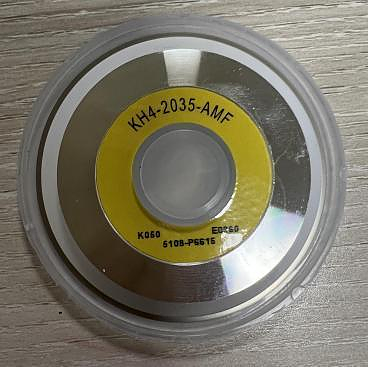
WAFER DICING TOOLS
Dicing blades and dressing plates.
Blade construction and dressing-plate selection are matched to substrate, package, kerf quality, wear behaviour and equipment conditions.
Select the blade and dressing board around the work material and cut-quality target.
Final materials, dimensions and process conditions are confirmed against the product drawing and application requirements.
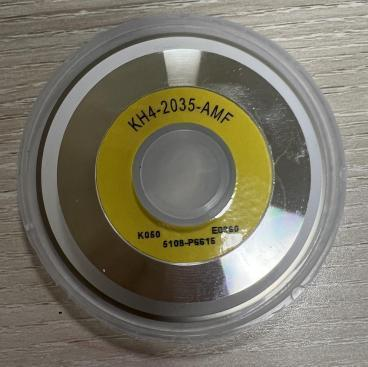
Dicing blades
Metal-bond blades provide strong abrasive retention and low wear for precision cutting and grooving. Resin-bond blades can be evaluated where reduced chipping and a smoother cut surface are priorities.
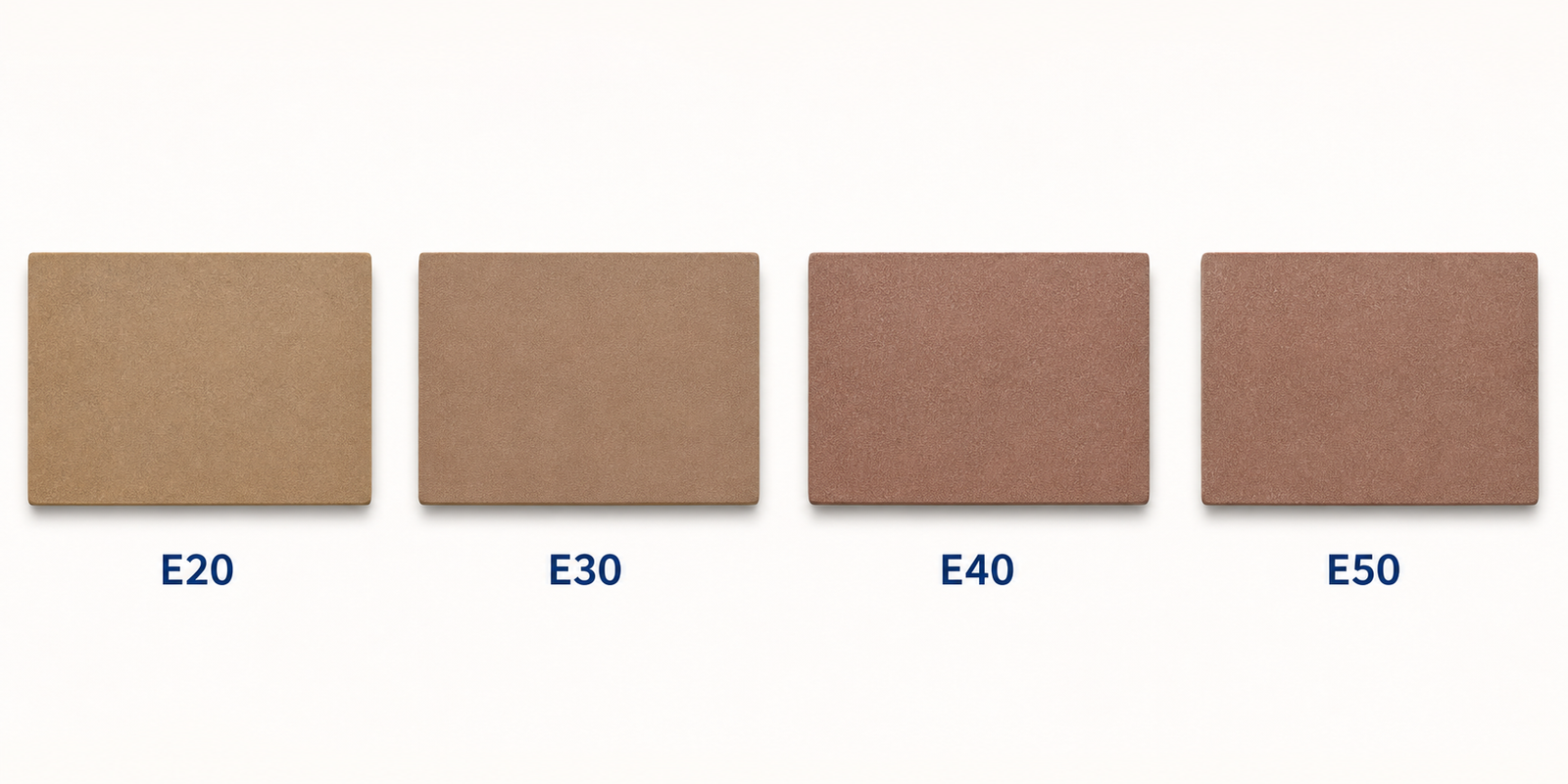
Four dressing-board grades for different blade-conditioning requirements.
- E20
- For shortening pre-cut time; verified #1700–#2000 range.
- E30
- For post-pre-cut conditioning quality; verified #1800–#3000 range.
- E40
- For finer blade grit; verified #3500–#4000 range.
- E50
- For the finest verified range, #4500–#5000.
Structure, material and process conditions.
Blade options by material
Verified blade applications cover thin silicon wafers, SiC, GaAs, GaP, glass, quartz, stainless steel, ceramics, AlN, BGA and other hard or brittle materials.
Metal-bond blades
Sintered metal-bond systems provide holding strength and lower wear for precision cutting or grooving of packages, ceramics, optics and electronic components.
Resin-bond blades
Resin systems are selected where reduced chipping, cracking and smoother cut surfaces are key priorities for hard and brittle substrates.
Dressing-plate function
Dressing plates expose abrasive grains, correct blade condition and remove process build-up. Selection considers blade grit, dressing amount, edge condition, roundness and production interruption.
Information for evaluation
Please provide equipment and spindle conditions, current blade and dressing-plate specifications, substrate or package, thickness, target kerf, acceptable chipping and current wear or yield issues.
PROCESS CHOICES & DOCUMENTED EXAMPLES
Fewer dressing passes. Put the result to the test.
The reference test compares F40 and E40 using two specified blade models. It supports a focused second-source trial, not a blanket drop-in guarantee.
Swipe the table sideways to compare all columns.
| Blade in the test | F40 reference | E40 alternative |
|---|---|---|
| ZH05-SD4500-N1-50 | 30 dressing lines | 15 dressing lines |
| ZHT-15232030 (27HCDD) | 30 dressing lines | 15 dressing lines |
| Blade wear in the comparison | 10 μm | 10 μm |
| Model cross-reference in the source | F20 / F30 / F40 / F50 | E20 / E30 / E40 / E50; select by blade grit and process. |
DISCO is identified only for compatibility reference; the alternative is not an original DISCO product. Confirm blade dimensions, spindle speed, feed, cutting depth and quality criteria through an on-machine trial. Half the dressing lines does not by itself prove half the total consumable cost.
START A PROJECT
Let’s manufacture what comes next.
Share your design, application or manufacturing challenge.
Talk to our team↗